

How Gentrification Has Changed Racial Makeup
Gentrification
Gentrification
Gentrification is a procedure of alter currently underway in many American cities. Gentrification brings conflict between longtime residents of old neighborhoods and new arrivals.
Subjects
Anthropology, Folklore, Social Studies, U.S. History
Image
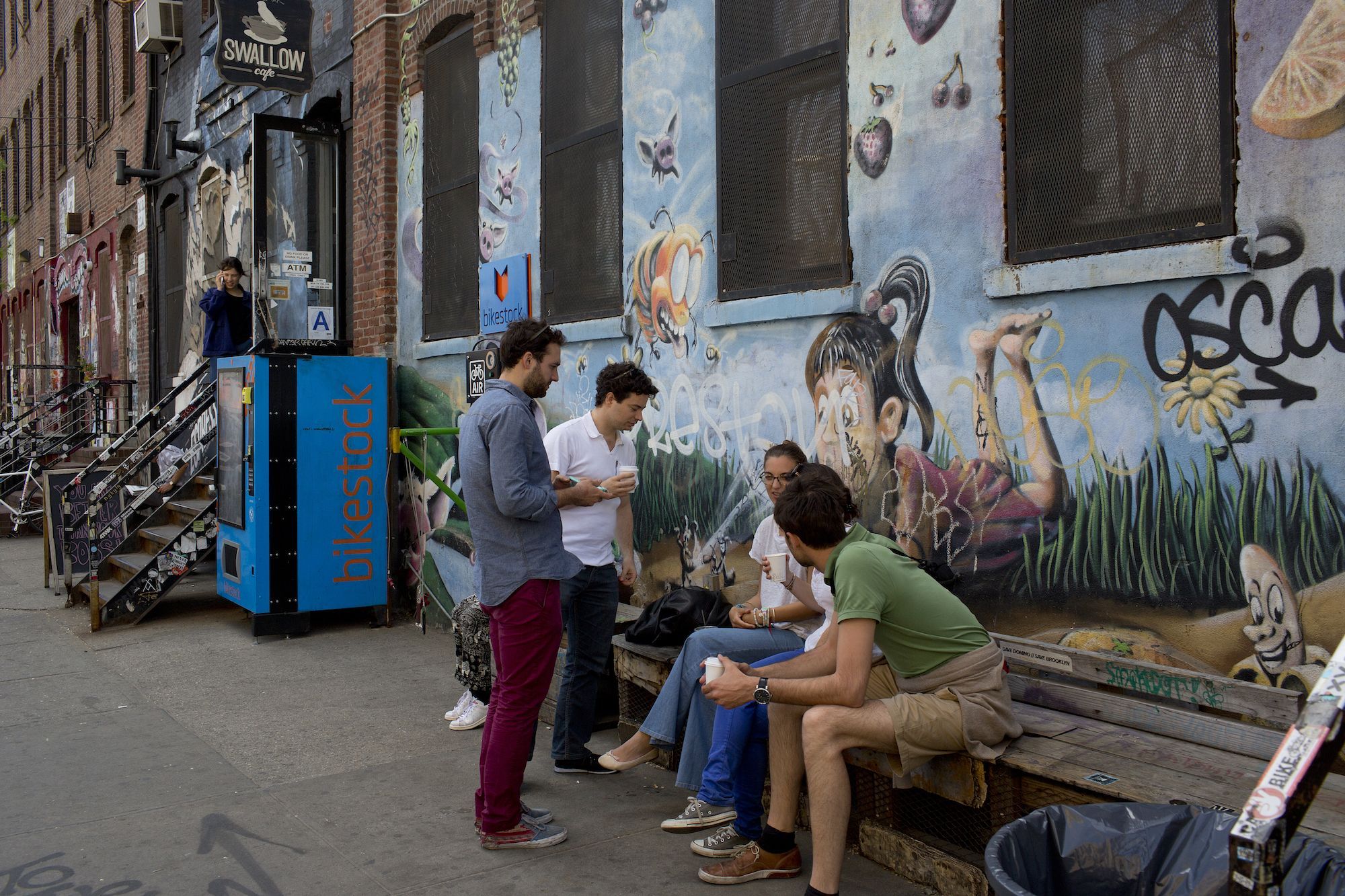
Gentrification in Bushwick
Gentrification is underway in many U.Southward. neighborhoods similar Bushwick in Brooklyn, New York. This process can disrupt the traditional makeup of a neighborhood with the influx of wealthier people moving into downtrodden, largely minority, urban neighborhoods.
Photograph by Andrew Lichtenstein/Corbis via Getty Images
Gentrification describes a process where wealthy, higher-educated individuals begin to motility into poor or working-class communities, often originally occupied by communities of colour. The people and businesses that move into gentrifying neighborhoods may have goals for their new homes that are at odds with the goals of people who have lived there for a long time. Ascension costs of living and a changing customs civilization can make for a difficult adjustment for longtime residents. These changes may drive out people of colour and minority-owned businesses. At the same time, gentrification brings much needed investment into long-neglected areas. Gentrification is thus a complicated upshot that involves many different stakeholders and perspectives. The poor communities of colour who tend to inhabit neighborhoods targeted for gentrification were often the victims of unfair housing policies from the end of World War II. During the postwar economical boom, many suburbs appeared, located on the outskirts of cities. They provided the advantages of urban environments without the disadvantages of living in shut proximity to others. In order to encourage people to move into suburbs, real estate brokers practiced something called blockbusting. They encouraged black families to pay a premium to movement into item urban neighborhoods so that white families would sell their houses at a low price to move out to the suburbs. Afterwards this process was complete, the new majority-African American communities were denied the money they needed to invest in improvements to their neighborhoods through a do called redlining. These factors combined to reduce opportunities in many urban areas. Equally a upshot, the low toll of moving into those neighborhoods opened them upward to gentrification. Every bit a neighborhood gentrifies, the economic opportunity that information technology represents increases. More people move into the expanse to take reward of those opportunities, and and then the desirability of that expanse increases fifty-fifty more than. Developers begin to tear down old housing to build new. Old shops, restaurants, and other neighborhood features may exist driven out past storefronts that cater to new residents. Perhaps worst of all, the old residents themselves may exist forced to exit. Rising costs of living and a changing mural for jobs mean that the benefits gentrification brings to an area are often distributed unequally. Because the potential economic benefits of gentrifying neighborhoods are very smashing, however, at that place are lively debates about whether gentrification is skilful or bad and whether it should be embraced or resisted. At that place is fifty-fifty some research that suggests that black, working-form families tend to stay in gentrified neighborhoods rather than leave them, and that the economic benefits of gentrification exercise indeed accomplish all residents. For now, cities and their residents must detect paths toward economical improvement that benefit both old communities and new ones.
Gentrification is underway in many U.Due south. neighborhoods like Bushwick in Brooklyn, New York. This process tin disrupt the traditional makeup of a neighborhood with the influx of wealthier people moving into downtrodden, largely minority, urban neighborhoods.
Photo by Andrew Lichtenstein/Corbis via Getty Images
blockbusting
Substantive
using the threat of minority presence to convince property owners to sell at a lower price, then reselling the property at a higher price, ofttimes to minorities.
community
Noun
social grouping whose members share common heritage, interests, or civilisation.
development
Noun
construction or preparation of land for housing, manufacture, or agronomics.
policy
Substantive
set of actions or rules.
redlining
Substantive
the exercise of denying investments and credit based on someone's race or ethnicity.

How Gentrification Has Changed Racial Makeup,
Source: https://www.nationalgeographic.org/encyclopedia/gentrification/
Posted by: weaverhousee82.blogspot.com
0 Response to "How Gentrification Has Changed Racial Makeup"
Post a Comment